
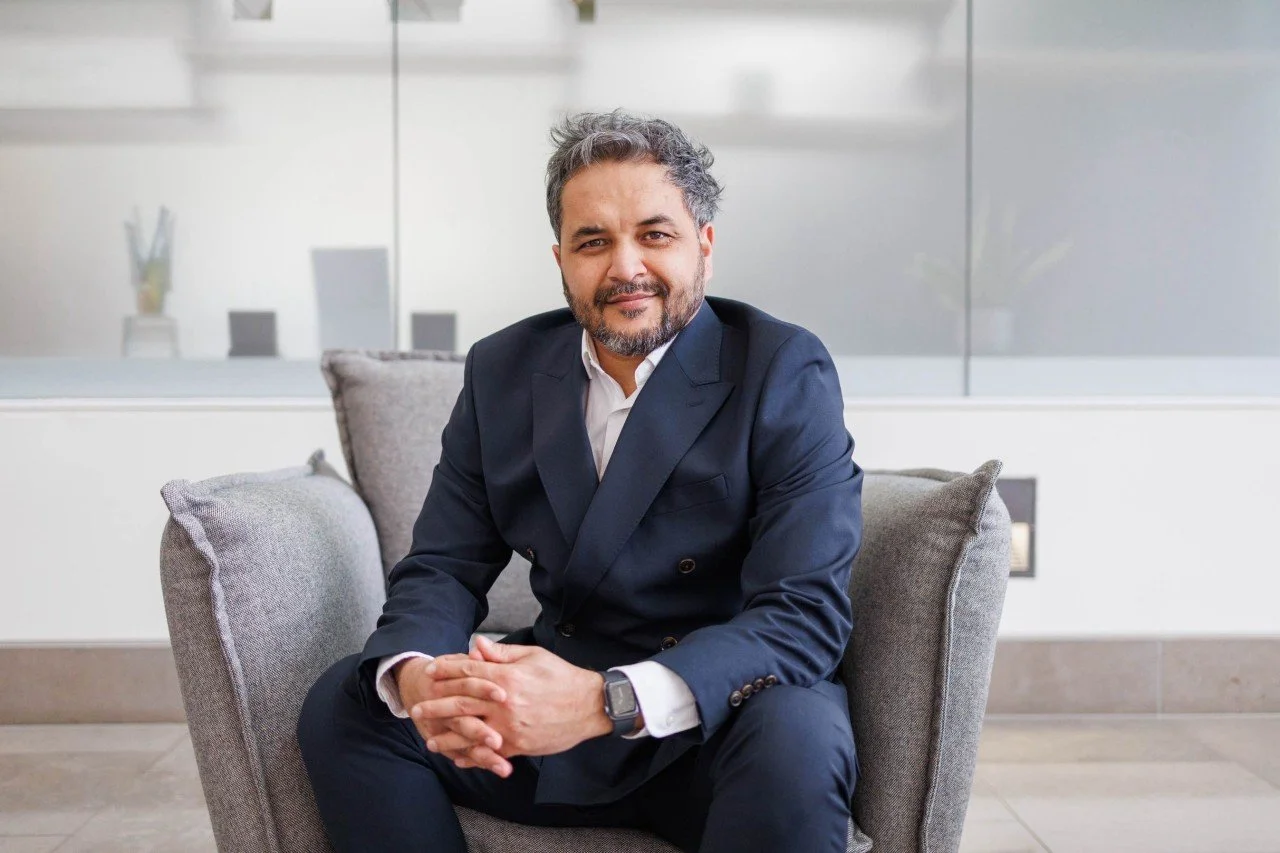
Omar Ghyasy
is a communication and media professional with over a decade of experience across international media and humanitarian organisations.
He began his career at the BBC World Service, where he worked as a multimedia producer covering South and Central Asia and contributed to the launch of BBC Persian TV.
He later joined the International Committee of the Red Cross (ICRC), where he spent more than ten years working in complex operational contexts, including Afghanistan, Bangladesh, Papua New Guinea, and Egypt. During this time, he held several senior communication roles, leading teams and developing strategic communication initiatives to strengthen understanding of humanitarian law and improve engagement with governments, media, and local communities. In his final role with the ICRC in Geneva, he served as Diversity and Inclusion Manager.
Today, he is based in the United Kingdom, where he works as an entrepreneur and property investor, while also continuing to use his multilingual communication skills as an interpreter.
His professional journey reflects the evolving paths many humanitarian professionals take as they transition from international operations into new sectors and forms of leadership, often without a clear roadmap.
You can know more about Omar’s professional journey visiting his Linkedin profile here.
Picture by Amit Patel from Count Photography.
Q1: When did you first realize that a professional transition had become necessary?
The turning point came during my final role at headquarters, when I moved into a Diversity and Inclusion position.
On paper, it felt like a natural progression, a role with visibility, responsibility, and the opportunity to contribute to meaningful institutional change.
In practice, however, I found myself navigating a context where there was a lack of clarity around mandate, expectations, and decision-making processes. Over time, this created a growing gap between the values I believed I was contributing to and the reality I was experiencing.
That misalignment became difficult to sustain not only professionally, but also personally. It affected my sense of direction, my motivation, and eventually my health.
The end of my contract came shortly after, marking an abrupt close to more than a decade in the humanitarian sector.
That moment clarified something important for me: it wasn’t the work itself I had outgrown, but the conditions under which I was operating. Staying was no longer compatible with the kind of professional and personal life I wanted to build going forward.
Q2: What was the most challenging part of this transition beyond the practical or technical aspects?
The most challenging part was identity, letting go of a role that had quietly become a large part of how I understood my own worth.In the humanitarian sector, your identity is often reinforced externally: the legitimacy of the organisation, the moral weight of the mission, the clarity of purpose.
Stepping away from that meant confronting uncomfortable questions about who I was without those markers. I had to sit with the fear of becoming “less relevant” or less legitimate in environments that didn’t immediately recognise that background.
“The hardest part was not changing careers. It was redefining who I was without the organisation.”
There was also a significant emotional shift around security. Humanitarian work, while demanding, offers a structured form of protection: contract cycles, institutional backing, a clear narrative of contribution. Entrepreneurship and real estate offered the opposite: exposure, financial uncertainty, and responsibility without a safety net. The pace was different too, faster in some ways, yet lonelier, with fewer shared reference points.
Perhaps most unexpectedly, I had to recalibrate my relationship with doubt. In humanitarian settings, doubt is often absorbed by collective decision‑making.
During my transition, doubt became personal and constant. I had to learn to tolerate not knowing, to make imperfect decisions, and to trust a sense of direction that was still forming.
That inner work, disentangling identity from role and learning to live without institutional validation, was far more demanding than acquiring any technical skill?
To know more about Omar’s real estate project clic here
Q3: Which skill or experience from your previous chapters turned out to be more valuable than you expected?
Adaptability.
Years of working in complex, unstable environments trained me to absorb ambiguity, reassess quickly, and remain calm when variables change all of which turned out to be invaluable in entrepreneurship and property investment.
Equally important was communication. Being able to listen carefully, negotiate across cultures, and explain complex ideas clearly helped me build trust with partners, landlords, investors, and clients, even in sectors very different from humanitarian work.
“What surprised me was not just having these skills but realising they were highly valuable outside the humanitarian sector, once I learned how to position them in a language the market understands.”
Finally, I underestimated how much resilience I had developed. Not resilience as endurance, but as the ability to start again without bitterness a skill I didn’t realise I was carrying until I needed it.
Q4: Looking back, was there a period of uncertainty that later proved to be structuring?
Yes, allowing myself not to rush into a predefined replacement career.
There was pressure, both internal and external, to move seamlessly into something “adjacent” to humanitarian work: consulting, policy, or advisory roles.
Choosing to pause instead, to explore, test, and even fail quietly, gave me space to reconnect with what genuinely motivated me, rather than simply translating my past into a new context.
That period of uncertainty protected me from recreating the same constraints under a different label.
“It allowed the transition to be shaped from the inside out, rather than as a reaction to expectations and that made all the difference.”
Q5: If you were speaking to someone exactly where you were before your transition, what would you tell them?
I would say: you don’t need to hate your current work for it to be time to leave it.
A transition doesn’t mean rejection of what came before. It can be a continuation just expressed differently. But it will involve discomfort, identity shifts, and moments where you question yourself more than you ever did inside the institution.
Prepare practically, yes but prepare emotionally too. Be patient with your own uncertainty. Allow yourself to be a beginner again. And most importantly, don’t underestimate what you carry with you, even when the new environment doesn’t immediately recognise it.
The transition is rarely clean or linear, but it can be deeply recomposing if you give it the time and honesty it requires. Above all, invest in your education and respect the new path you will be undertaken. Mistakes in new business ventures can be costly so investing in training and mentorships when transitioning into something new or starting your own business is invaluable!
Omar’s story highlights a reality many experienced professionals face:
transition is rarely a clear decision, it is often a gradual shift, shaped by doubt, exploration, and repositioning.
Clarity does not come first.
It is built, through reflection, structure, and the courage to redefine what comes next.
If this reflection resonates with your own career questions, you’re not alone
This interview is part of The Humanitarian Pivot, a special March series exploring the diverse career evolutions of aid workers: from field-to-HQ moves to entrepreneurship. To see the full series clic here
